Quick Answer
Okay, so here's the quick version. You got a tree that's looking sketchy? The main thing is figuring out if it's a DIY trim job or a 'call a pro before it falls on your house' situation. If you see big dead branches, a serious lean, or it's anywhere near a power line, don't touch it. A simple trim on a small tree might cost a few hundred bucks for a pro. A full removal of a monster oak? You could be looking at a few thousand. Don't be a hero; gravity is undefeated.
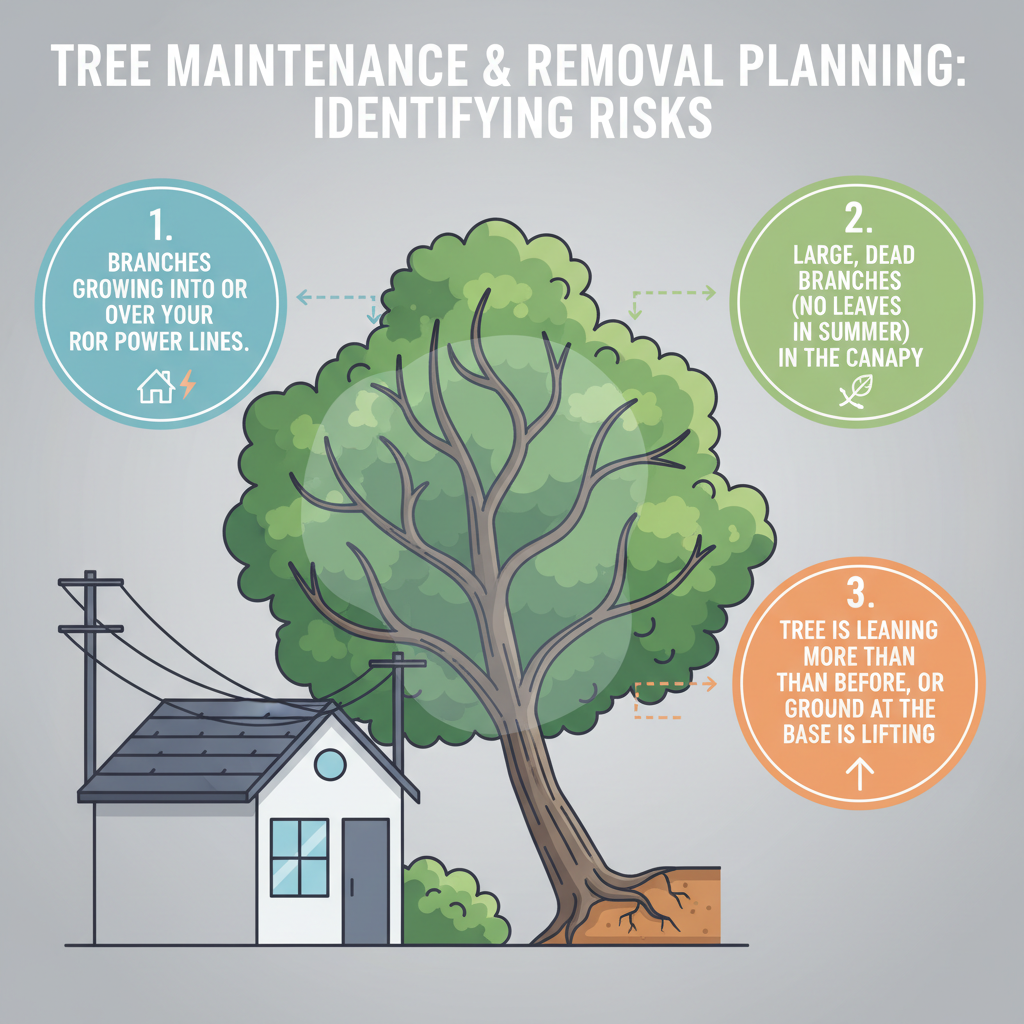
Common Symptoms
Possible Causes
Step-by-Step Diagnosis
Step 1
Stand back from the tree, even across the street, to get a full view of its overall shape, lean, and canopy density.
Step 2
Walk around the base of the trunk, looking for cracks, peeling bark, fungal growths, or hollow spots.
Step 3
Examine the ground around the tree for signs of heaving soil or large surface roots that are causing issues.
Step 4
Use binoculars if you have them to scan up the trunk and along major limbs, looking for deadwood, broken branches, or cavities.
Step 5
Check the branch unions. Strong unions look like a 'U' shape; weak ones look like a tight 'V' and are prone to splitting.
Step 6
Assess the leaves. Are they healthy and green, or are they yellowed, wilted, or sparse in sections?
Step 7
Identify the tree species if possible, as it can tell you about common problems or typical growth patterns.
DIY vs Professional Costs
| Repair Type | DIY Cost | Professional Cost | Time Required |
|---|---|---|---|
Pruning small branches (under 2" diameter, reachable from ground) | $50-150 (for good pole pruner/saw) | $250-600 | 1-3 hours |
Large branch trimming (requiring ladder or climbing) | DON'T DO IT | $600-2,000+ | 2-5 hours |
Small Tree Removal (under 20 ft, away from structures) | $100-300 (chainsaw & safety gear) | $500-1,200 | 2-4 hours |
Large or Hazardous Tree Removal | DON'T EVEN THINK ABOUT IT | $1,500-7,000+ | A full day or more |
Stump Grinding | $150-250 (for rental) | $200-500 (per stump) | 2-3 hours |
When to Call a Professional Tree Service
- Anytime a branch you need to cut requires you to get on a ladder or leave the ground.
- If the tree or its branches are within 10 feet of a power line.
- When the tree shows signs of major structural weakness, like deep trunk cracks, significant lean, or large pockets of rot.
- For the removal of any tree that is taller than your house or has a trunk diameter larger than your leg.
- After a severe storm has left large, broken limbs hanging precariously in the tree.
- If you are unsure about the tree's health and stability; a certified arborist's diagnosis is worth the cost.
- When you need a stump ground out and don't want to wrestle with a heavy, dangerous piece of rental equipment.
Prevention Tips
- Prune trees when they are young to establish a strong central trunk and remove weak, competing branches.
- Perform a visual inspection of your trees at least twice a year and after every major storm.
- During droughts, provide large trees with a deep, slow watering to reduce stress.
- Apply a 2-3 inch layer of mulch around the base, but keep it from touching the trunk directly to prevent rot.
- Avoid damaging the trunk with lawnmowers or string trimmers and protect roots during any nearby digging or construction.
- For large, mature, or valuable trees, consider hiring a certified arborist for a periodic health assessment every 3-5 years.

Frequently Asked Questions
Related Guides
Tree Removal vs. DIY Tree Cutting (Troubleshooting & Fixes)
Thinking about cutting down that tree yourself? As a guy who's seen it all go wrong, here's my honest take on when to DIY and when to call a pro.
Deciding between DIY tree care/removal and hiring professional tree services, considering costs, risks, and benefits. Troubleshooting & Fixes
Deciding on DIY Tree Work vs. Hiring a Pro (My Two Cents)
A veteran tech's brutally honest guide on DIY tree trimming vs. calling a pro. Learn when to save a buck and when you're risking your life and your house.
DIY Tree Work vs The Pros: When to Call for Backup (A Reality Check)
Thinking of DIY tree work? A 25-year vet explains the risks. Learn when to tackle it yourself and when calling a pro is the only smart move.
Neglecting Tree Maintenance vs. Professional Tree Services Troubleshooting & Fixes
Unexplained tree decline, leading to visible signs of distress or death in trees without an obvious cause. Troubleshooting & Fixes
Is your tree just not looking right? A veteran arborist explains how to diagnose vague symptoms like leaf yellowing or thinning canopy and when to call for help.
Need Professional Help?
Find top-rated tree service experts in your area